A Quiet Viewing Session for Reading Casino Dialogue
A quiet viewing session for reading casino dialogue helps language learners map who speaks, how turns connect, and what a careful class note can say.

A quiet viewing session for reading casino dialogue can reveal how speakers negotiate a shared task, even when the scene is not meant to teach language. Focus on the interaction’s social roles—who asks, offers, declines, or decides—and leave subtitle comparison and unfamiliar-word collection for other kinds of study.
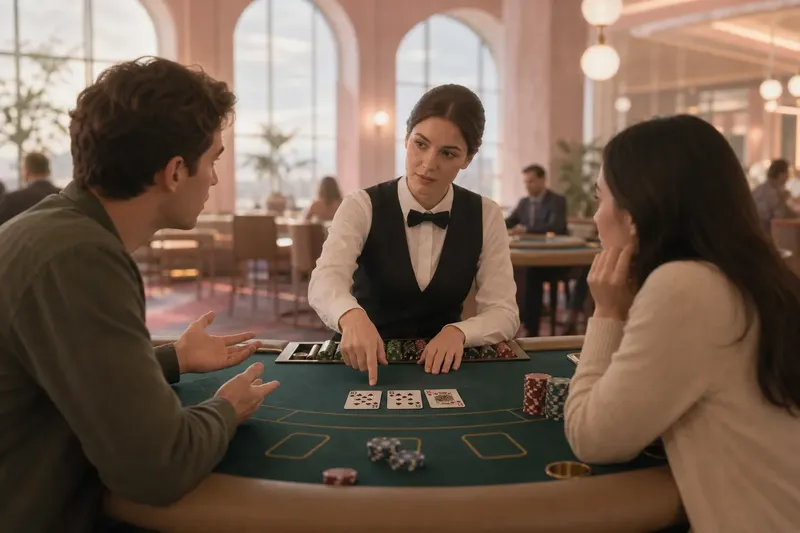
For university learners, this approach links language to cultural context. A casino scene may bring together a dealer, a guest, and people waiting nearby; their different responsibilities shape what they can say and how direct they can be. The aim is to describe those roles carefully, not to infer a whole culture from one fictional exchange.
What can a casino scene reveal about social roles?
Start by identifying who is responsible for the next action. A dealer may explain what is happening at a table, while a guest may ask for information or make a request. These roles can influence the exchange without fully determining the speakers’ personalities or intentions.
Listen for how a speaker manages authority and courtesy. A direct instruction, a softened suggestion, and a deferential question may all address the same practical need, but they position the speakers differently. Record the wording and the immediate situation before deciding what those choices imply.
How do you keep cultural interpretation grounded?
Separate what the scene shows from what you infer. “The dealer offers another option” describes an observable action; “the dealer is being dismissive” interprets an attitude. The second claim needs more support from the surrounding exchange, the character’s later conduct, or the scene’s broader framing.
- Check the speaker’s role: If the person is responsible for explaining a procedure, treat an instruction as role-related; if the line exceeds that responsibility, note the added social effect and consider another interpretation.
- Check who holds the decision: If one person can accept or refuse the proposal, describe that choice; if authority is shared or unclear, avoid assigning control to a single speaker.
- Check the form of address: If speakers use titles or formal language, note the distance it creates; if they use first names or casual forms, consider familiarity but do not assume friendship without further evidence.
- Check how a refusal is phrased: If the speaker says no directly, record the direct refusal; if the speaker gives a reason or offers an alternative, note how that wording softens or redirects it.
- Check the next action: If the other person follows the suggestion, describe the observable outcome; if they ask again or choose differently, revise your account of how effective the suggestion was.
- Check whether the scene provides context: If earlier or later dialogue explains a custom, use that information; if it does not, mark the cultural claim as uncertain rather than filling the gap with assumptions.
How can you make a class note from one exchange?
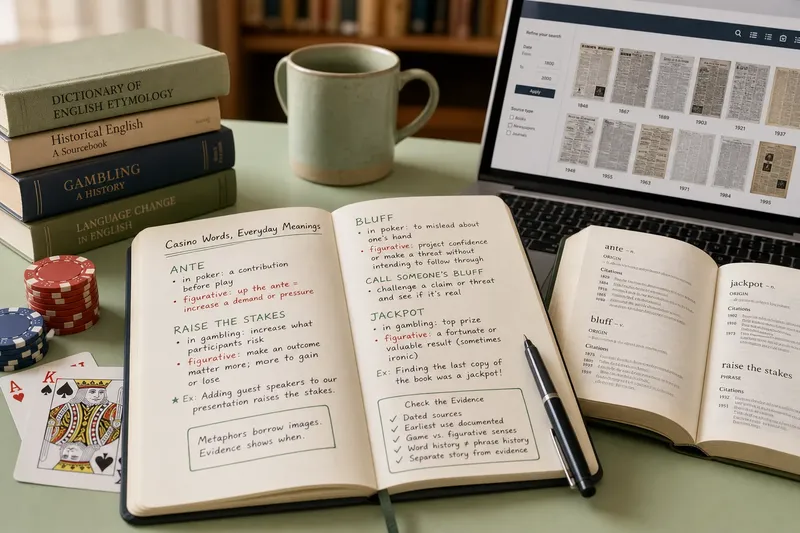
Use a simple record with four entries: the speakers’ roles, the immediate task, the words or action that shape the interaction, and the evidence for your interpretation. This structure keeps a cultural observation connected to the scene rather than to a broad claim about a language community.
Say you choose an invented scene in which a guest asks a dealer whether a seat is available. The dealer replies, “I can check after this hand,” and the guest waits. First, record the guest’s request and the dealer’s work-related constraint; next, note that the reply postpones rather than refuses the request; then record the guest’s decision to wait. The supported interpretation is that the dealer manages a request while attending to an immediate responsibility—not that the exchange proves a general rule about politeness or casino culture.
What questions help you analyze casino culture?
Does a polite phrase always signal respect?
Not by itself. Consider the speaker’s role, the wording, and the response that follows; a courteous phrase may reflect routine service language, personal respect, or both.
Can one scene represent a whole culture?
No. A scene gives evidence about its own characters and setting, shaped by the writer’s choices. Use it to form a focused question about social behavior, not a sweeping claim about everyone who speaks the language.
What if a speaker’s intention is unclear?
Describe the words and the next action before naming an intention. If several readings remain plausible, keep them open and identify what later dialogue would help distinguish them.
How can I discuss a scene respectfully in class?
Distinguish a character’s behavior from the behavior of a language community. Support your point with a specific exchange, and phrase uncertain interpretations as questions rather than facts.
How should you end the viewing session?
Write one short observation that names a role, a conversational choice, and its visible consequence. Then add a question for discussion, such as whether the speaker’s phrasing reflects personal style, workplace responsibility, or both.
A quiet viewing session for reading casino dialogue is most useful when it leaves you with a precise observation and an honest boundary around what the scene can support. Bring that distinction into class: it makes cultural discussion more thoughtful without treating a fictional exchange as a portrait of an entire community.